Renting in San Francisco
San Francisco has the fastest-rising rents of any large US city: a typical one-bed now advertises at about $4,400 a month, up roughly a quarter in a year, as AI hiring pulls people into a city that builds very little. Good flats draw crowded open houses and offers above the asking rent, and newcomers without US credit history or a high salary struggle most. Most older buildings fall under the city's own Rent Ordinance on top of California law, which protects you once you are in but does nothing to lower the price of a new let.
Checked 1 October 2026Deposits, contracts and notice periods: United States rules

The situation right now
Rents are climbing faster here than anywhere else in the country. Zumper put the median asking rent for a one-bed at a record $4,400 in September 2026, up 25.4% in a year, and a two-bed at $6,340, up 26.8%; only New York is dearer, by $180. Zillow's averages for the same month are $4,495 for a one-bed and $6,445 for a two-bed. The city's chief economist and the controller's August 2026 economic report put it down to AI investment and the in-migration it brings, on top of decades of under-building: asking rents rose 14% between March and July 2026 alone (CoStar via CRE Daily), and almost no new apartments are being completed.
Competition is stiff. At the start of 2026, before the spring surge, Yardi data analysed by RentCafe counted about eight prospective renters per vacant apartment in San Francisco, with occupancy at 94.2% and nearly half of tenants renewing rather than moving. CoStar measured vacancy at 3.6% in July 2026. Local reporting in August 2026 describes open houses with half a dozen groups at once, applicants handing over printed application packs, and winners offering $200 to $500 a month above the asking rent. Landlords usually want gross household income of two and a half to three times the rent, a US credit check and references, so a $4,000 flat needs about $10,000 to $12,000 a month before tax, or a US guarantor.
The market is split in two. Buildings first occupied before 14 June 1979 (apart from single houses and, for tenancies since 1996, most condos) are rent-controlled: once you are in, the rent can rise only by the Rent Board's annual allowance, 1.6% from March 2026 to February 2027. That is why sitting tenants rarely move and why those older flats, often let by small landlords on Craigslist, are so sought after. Newer towers in SoMa, Mission Bay and around Market Street belong mostly to large landlords who let quickly and openly but at the top of the market. Between tenants, rent in every unit resets to whatever the landlord can get, and almost all units, old or new, have the city's just cause eviction protection.
On a normal salary most newcomers start in a room. Craigslist rooms in shared flats ran from about $1,000 to $1,900 a month in late September 2026, cheaper near SF State and in the outer neighbourhoods. A one-bed of your own costs about $3,650 in the Sunset to $4,500 on Nob Hill. The below-market-rate lotteries on the city's DAHLIA portal are real but slow and uncertain, and across the bay one-beds in Oakland and Berkeley average about $2,100 to $2,300.
Behind the scores
Landlords want gross income of 2.5 to 3 times the rent (UDR: 2.5, guarantors 4), a US credit check and often renter's insurance (UDR Edgewater, 2026). Most newcomers lack US credit and a US guarantor, and median full-time pay of $116,752 falls short of 2.5 times a $4,000 rent. Rent-controlled flats rarely come free, and DAHLIA lotteries can take a year or never produce an offer. Short lets are capped at 90 unhosted nights. Corporate buildings let quickly to anyone who passes the income test. As of September 2026.
One-bed asking rents $3,650–4,500 in central-ish ZIP codes, Sunset to Nob Hill (Zillow, 2026-09); advertised prices must include mandatory fees, utilities are extra. Median full-time pay $116,752 gross (Census ACS 2024, table S2001, San Francisco): about $6,903 a month net after 2026 federal tax, Social Security, Medicare, California tax (2025 schedule, the latest) and SDI (our calculation). Share 53–65%, middle 59%; the city median of $4,400 (Zumper) gives 64%. Earnings are 2024, rents 2026. Cross-check: all workers $86,971 gross, 67–83%. As of September 2026.
Bidding and crowded open houses: CoStar reports bidding wars, vacancy of 3.6% and asking rents up 14% from March to July 2026 (CRE Daily, 2026-08); an Alamo Square open house drew six groups and an offer $500 a month over asking (SF Standard, 2026-08). Yardi data via RentCafe, early 2026 before the surge: about eight renters per vacant flat, 43 days to fill. No 2026 days-online figure exists for the city. Flats are not reliably gone within hours. As of September 2026.
Dated official warning: in August 2026 the San Francisco City Attorney's office warned renters to be on high alert for fraudulent listings, after a renter lost $18,600 to a cloned Duboce Triangle listing whose scammer used the real open house (SF Standard, 2026-08). The city Treasurer launched StopScam SF in July 2026, and a Board of Supervisors hearing on rental scams was requested for October 2026 (The Real Deal, 2026-08). As of August 2026.

What it costs
| Type | Typical asking rent | Source |
|---|---|---|
| Room in a shared flatPrivate rooms seen on Craigslist San Francisco in late September 2026 (about 210 ads): $700–1,200 near SF State, in the Excelsior and in the outer Sunset, $1,500–2,000 in Hayes Valley, North Beach, Russian Hill and Noe Valley, and up to $2,900–3,000 for a room with its own bathroom in a SoMa tower. Utilities are often included in rooms, rarely in whole flats. Many rooms are sublets from a master tenant, whose charges are capped in rent-controlled flats. | $1,000–1,900 a month(€890–1,700 a month) | Craigslist San Francisco, rooms and shares (listings seen 1 October 2026), September 2026 |
| One-bed flat (asking rents)Zillow one-bed averages by ZIP code: $3,650 Sunset (94122), $3,947 Mission and Bernal Heights (94110), $4,095 SoMa (94103), $4,200 Outer Richmond (94121), $4,495 Hayes Valley, Civic Center and the Tenderloin (94102), $4,500 Nob Hill, Russian Hill and Polk (94109), $5,124 Marina and Cow Hollow (94123). City averages: $4,495 (Zillow), $4,400 median (Zumper, up 25.4% in a year), $3,631 (Apartments.com, up 13%). Studios average $2,300–3,200. | $3,650–4,500 a month(€3,250–4,000 a month) | Zillow Rental Manager market trends by ZIP code (28 September 2026); Zumper National Rent Report (September 2026), September 2026 |
| Two-bed flat (asking rents)Zillow two-bed averages from $4,800 in the Sunset and $5,450 in the Outer Richmond to $5,750 in the Mission, $6,144 in SoMa and $6,745 on Nob Hill; the Marina averages $7,995. City figures: $6,445 (Zillow) and a record $6,340 median (Zumper, up 26.8% in a year). Sharing a two-bed is how many people afford the city. | $4,800–6,750 a month(€4,300–6,000 a month) | Zillow Rental Manager market trends by ZIP code (28 September 2026); Zumper National Rent Report (September 2026), September 2026 |
| Three-bed flat or house (asking rents)Zillow three-bed averages: $6,500 Outer Richmond, $6,720 Sunset, $7,995 Mission, $8,950 SoMa; the city average is $7,817. Many three-beds in the west of the city are houses or flats in two- to four-unit buildings let by small landlords. | $6,500–9,000 a month(€5,800–8,000 a month) | Zillow Rental Manager market trends by ZIP code (28 September 2026), September 2026 |
Asking rents on the portals; what people actually pay is often lower for older contracts and higher for furnished short lets. Deposits and what can legally be charged on top are on the United States page. The euro values are there to compare cities: rounded, a month, at the exchange rates of 23 October 2026 (how we convert).
Where to search
We can never guarantee that an agency, listing or landlord is legitimate. The channels below are where people in San Francisco actually look, not a list of safe places. Never pay a deposit, a fee or a "reservation" before you have seen the flat and met the person with the keys, and read our guide to avoiding rental scams first.
Official channels
Public housing queues, municipal registers and city programmes. Slow, but this is where the honest, regulated stock is.
- DAHLIA San Francisco Housing PortalThe city's portal for below-market-rate (BMR) and 100% affordable rentals, run by the Mayor's Office of Housing and Community Development. Each building has an application deadline, then a lottery ranks applicants, with preferences for people who already live or work in the city (at least 75% of working time). Your household income must fall within the listing's range, usually about twice the rent. On 1 October 2026 five lotteries were open, for example one-beds at $971–2,153 a month at 850 Turk Street. The city's own guide warns that leasing agents may contact you anything from three weeks to a year after the lottery, or not at all, so apply often but keep searching privately.
- SF Planning: Property Information MapLook up any address to see when the building was built. Units in buildings first occupied before 14 June 1979, other than single houses and most condos, are covered by rent control; the Rent Board's counsellors can confirm a hard case.
- SF Rent Board: Learn about San Francisco rental lawsThe Rent Board's plain explanation of which units have rent control and which have only eviction protection, with free phone counselling on 415-252-4600 (weekdays 9 am to noon and 1 to 4 pm).
- SF Office of Short-Term Rentals: FAQsStays under 30 nights are allowed only in a host's own permanent home, with a city certificate number (STR-...) shown on every listing and at most 90 unhosted nights a year; stays of 30 days to a year in buildings need a separate permit. A whole flat offered on a short-term site as a long let is a reason to ask questions.
Portals
Where most listings are. Set alerts and reply fast; read every listing with the scam guide in mind.
 ZillowThe biggest US rental portal, with about 2,600 San Francisco rental listings on 1 October 2026. Listings posted through Zillow also appear on Trulia and HotPads. Scammers copy Zillow ads onto other sites, so contact the lister through Zillow and check that names match.
 Craigslist San FranciscoStill heavily used here, especially by small landlords letting older rent-controlled flats and by tenants seeking flatmates (the rooms and shares section had about 210 ads on 1 October 2026). It is also where the most scams appear: the site carries its own warning page.
 Apartments.comAbout 1,560 San Francisco rentals, mostly in large managed buildings, with the total monthly price, specials and income rules shown. Its market snapshot put the average one-bed at $3,631 in October 2026, up 13% in a year.
 HotPadsA map-based portal owned by Zillow, showing about 4,660 San Francisco rentals in October 2026, including many rooms and sublets.
 ZumperA rental portal that also publishes the monthly city rent reports quoted on this page. Some buildings let you apply online directly.
 PadMapperA map search over rental ads, handy for comparing streets and transport lines. Check where each ad originally came from before replying.
 SpareRoom (US)Rooms and flatmates in San Francisco. Smaller here than Craigslist or Facebook, but the ads are tied to accounts.
Agencies and relocation services
Most charge a fee, and we cannot vouch for any of them. Check the company register and reviews before you sign anything.
 AvalonBay Communities (San Francisco)A large corporate landlord with several buildings in the city, including AVA Nob Hill, Avalon Hayes Valley, Avalon at Mission Bay and Avalon Dogpatch. You apply directly online. Newer buildings like these are not rent-controlled.
 UDR (Edgewater, Mission Bay)A corporate landlord whose qualification page is a useful benchmark: household income of 2.5 times the rent, guarantors at 4 times, renter's insurance required, one-beds from $4,045 in October 2026, and a deposit-alternative insurance product offered.
 Veritas InvestmentsA San Francisco company that owns and lets older small and medium-sized apartment buildings. Vacancies are let at market rent; ask whether the unit falls under rent control, because then only the annual allowance applies afterwards.
 SF City RentsA leasing company that fills flats for landlords, with listings searchable by neighbourhood across the city.
 Bay Property GroupA Bay Area property manager that lets and manages flats and houses for private owners, with its vacancies on its own site.
 AMSIA San Francisco leasing and relocation company with both unfurnished rentals and furnished corporate flats. Furnished stays can bridge the first months while you build a US credit history, at a premium.
Groups and word of mouth
Facebook groups and forums are where the informal market lives, and where most scams start.
- Facebook: San Francisco Housing, Rooms, Apartments, SubletsRooms, sublets and flats posted by tenants and small landlords. Cloned ads and 'landlords' who cannot show the flat are common: never pay before you have checked who owns the unit.
- Facebook: Bay Area/SF Housing, Rentals, and SubletsMonthly stays and flexible leases across the Bay Area, useful for a first furnished room. Sublets may break the main lease, so ask to see the landlord's consent.
- Facebook: SF Roommate ExchangePeople looking for flatmates and rooms. Meet in person and see the room before sending any money.
- Facebook: University of San Francisco (USF) Housing, Sublets & RoommatesA student group listed by USF's off-campus housing office for USF students looking for rooms and flatmates.
Local tips
Gathered from local forums, city subreddits and expat groups, rewritten in our own words. They are what people who have done this say helped; none of it is a guarantee.
Check whether the flat is rent-controlled before you sign
Look up the address on SF Planning's Property Information Map. A unit in a building first occupied before 14 June 1979 that is not a single house usually has rent control: after you move in, the rent can rise only by the Rent Board's annual allowance (1.6% from March 2026 to February 2027), once a year. Newer buildings have eviction protection but no cap from the city, only California's. Over several years that difference is worth thousands, so a slightly dearer older flat can be the cheaper choice.
Source: SF Rent Board, rental laws and current rates pages, 2026
Bring a complete application to the open house
Small landlords often hold one open house and pick from the people who apply that day. Carry a printed pack: ID, offer letter or pay slips, bank statements, a credit report if you have one, references, and a one-page renter's resume about yourself. Decide your ceiling in advance: offers above the asking rent happen here, and the pressure of a crowded viewing is what scammers count on too.
Source: University of San Francisco off-campus housing guide; SF Standard, August 2026
No US credit history? Start with the big buildings
Corporate landlords state their rules openly, process applications in days, and accept guarantors or deposit-alternative insurance; some say that credit score is not the only factor. Small landlords letting one flat in an old building tend to rely on the US credit report and references. If you arrive without credit history, a corporate building, a furnished let or a room for the first year is often the way in, and California allows you to pay six months' rent in advance on a lease of six months or more.
Source: UDR Edgewater qualification requirements, 2026; AMSI; California Civil Code 1950.5
Renting a room? The master tenant cannot overcharge you
Many rooms are let by a tenant who holds the lease (the master tenant). In a rent-controlled flat they may not charge you more than your proportional share of what they pay the landlord, divided by rooms, people or space, plus a reasonable amount for furniture or utilities they provide. If you pay too much, the Rent Board's Subtenant Petition is free and has no time limit.
Source: SF Rent Board, report if you are being overcharged by a master tenant
Search in winter if you can
Zumper's figures show rents lowest in February and highest in September, with November and December the least competitive months. Students arriving for USF, SF State and UCSF terms, and new hires starting after summer, crowd the August–September market.
Source: Zumper San Francisco rent research, September 2026
Add up the real monthly cost
California requires advertised prices to include all mandatory fees, so large buildings now quote a 'total monthly price'. Electricity and gas (PG&E), internet and parking usually come on top, and big landlords require renter's insurance. Transport is cheaper than in most US cities: a Muni monthly pass costs $86, or $104 with BART inside the city.
Source: California Attorney General SB 478 FAQ; UDR; SFMTA fares, 2026
Look across the bay if the numbers do not work
Zillow puts the average one-bed at $2,095 in Oakland and $2,295 in Berkeley, about half of San Francisco's, with rents there roughly flat over the year. BART links downtown Oakland and Berkeley to Market Street. Daly City, just south of the border, is cheaper than the city too, though less so: large buildings there advertise one-beds from about $2,650.
Source: Zillow Rental Manager market trends, September 2026; Apartments.com, October 2026
Enter DAHLIA lotteries, but do not wait for them
Below-market-rate flats on DAHLIA cost a fraction of market rent, and new listings appear almost every week. Make an account, set email alerts and apply to everything you qualify for: once you live or work in the city you also get the 'live or work in San Francisco' preference, which moves you up the list. Documents proving a preference must be dated within 45 days of applying.
Source: SF Mayor's Office of Housing, guide to applying through DAHLIA (April 2026)
Neighbourhoods
The Mission and Bernal Heights (94110) mid-range
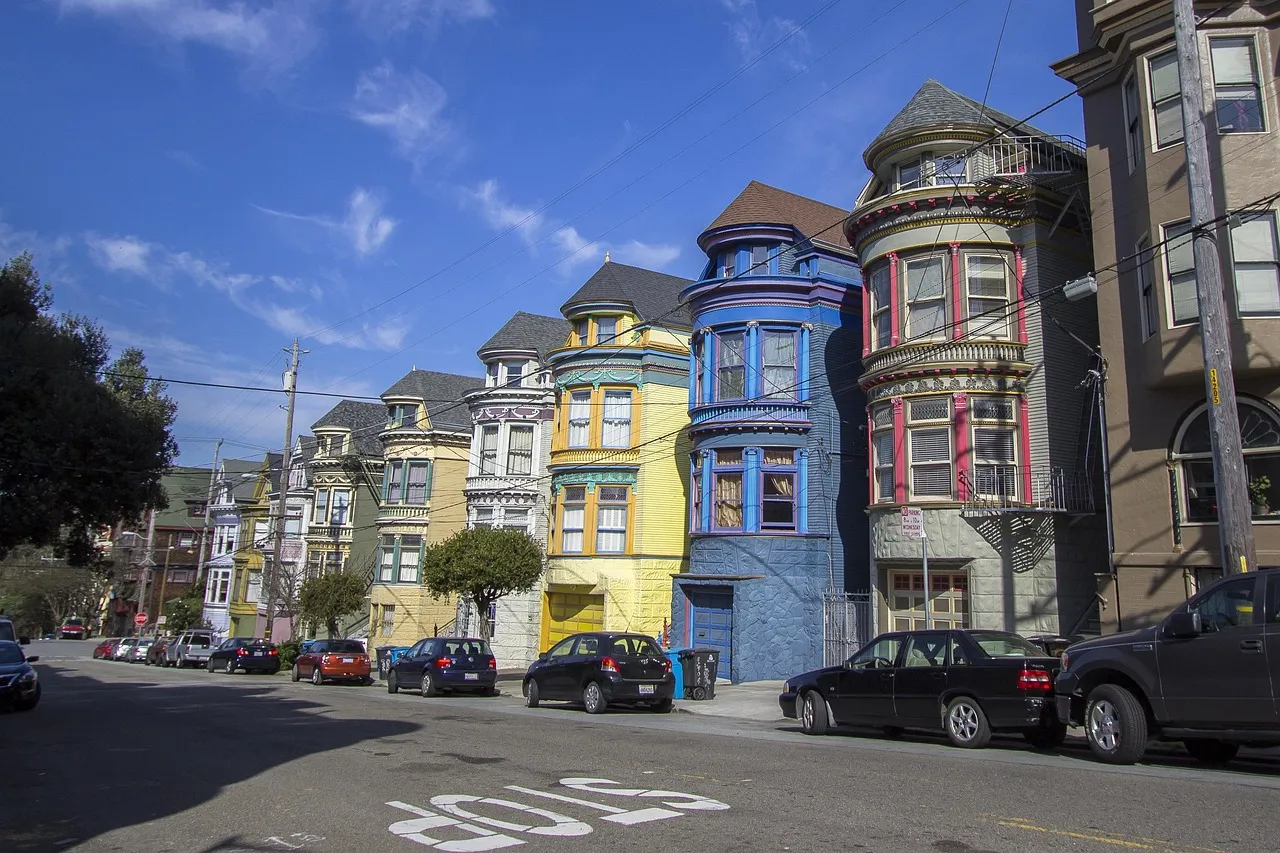
One-beds average about $3,950 and two-beds $5,750 (Zillow, September 2026). Sunny, lively and full of older flats in two- to six-unit buildings, many rent-controlled, plus rooms in shared Victorians. Valencia Street and the 16th and 24th Street BART stations make it a favourite for people working downtown or on the Peninsula.
SoMa and Mission Bay (94103, 94158) higher rents
One-beds average about $4,100 in SoMa (Zillow, September 2026), and Mission Bay towers start around $4,000. This is where most of the new high-rise rental buildings are, close to AI and tech offices and Caltrain, so expect amenities, online applications and no city rent control.
Hayes Valley (94102) higher rents
Boutiques, restaurants and Victorian flats next to Civic Center and the Market Street lines. The 94102 ZIP averages about $4,500 for a one-bed (Zillow, September 2026), and newer buildings on Market and Van Ness add more choice at the top end.
The Tenderloin and Civic Center (94102) lower rents
The cheapest part of central San Francisco: Zumper's median across all listings was $1,795 in September 2026, much of it studios and single-room hotel units. It is within walking distance of downtown, but conditions change from block to block, so visit at different times of day before you commit.
Nob Hill, Russian Hill and Polk Gulch (94109) higher rents
The ZIP with the most listings, about 230 in September 2026: studios average $2,395 and one-beds $4,500 (Zillow). Pre-war apartment buildings with doormen, steep hills and cable cars, walkable to the Financial District.
The Marina and Cow Hollow (94123) higher rents
The dearest area in this list: one-beds average about $5,100 (Zillow, September 2026). Flat, by the water and popular with young professionals; CoStar reports it has become a magnet for new tech hires, with bidding wars. Public transport is buses only.
The Sunset and the Richmond (94122, 94121) mid-range
One-beds average about $3,650 in the Sunset and $4,200 in the Outer Richmond (Zillow, September 2026). Quiet, foggy residential districts on either side of Golden Gate Park with many flats in small buildings and rooms near UCSF and SF State. Muni Metro's N Judah and L Taraval lines and buses run downtown, but it is a long ride.
Across the bay and south: Oakland, Berkeley, Daly City lower rents
One-beds average about $2,100 in Oakland and $2,300 in Berkeley (Zillow, September 2026), with far more listings per renter than in the city. BART runs under the bay to Market Street. Daly City, at the southern edge of the city on BART, is cheaper than San Francisco but dearer than the East Bay.
What landlords ask for
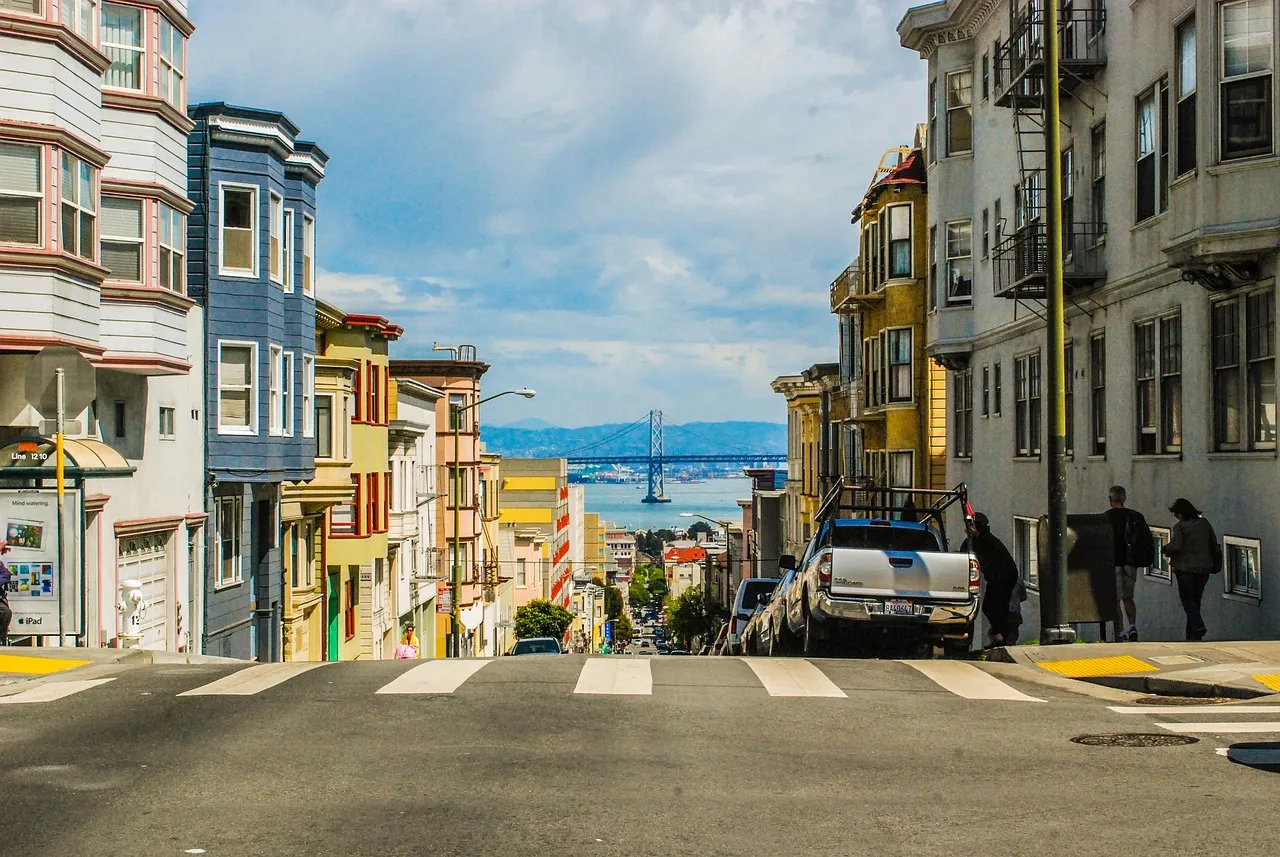
Have these ready as PDFs before the first viewing; in San Francisco the flat often goes to whoever sends a complete file first.
- Passport or other government photo ID for every adult who will live there, and your visa or work permit if the landlord asks. State law bans discrimination on citizenship or immigration status, and on source of income such as a housing voucher (California Attorney General).
- Proof of income: an offer letter or employment contract plus recent pay slips. Expect gross household income of 2.5 to 3 times the monthly rent; UDR, for example, asks for 2.5 times, so a $4,000 one-bed needs about $10,000 a month before tax.
- A US credit check, run by the landlord with your Social Security number (or an ITIN). Without US credit history, offer a guarantor, proof of savings, or rent in advance; screening fees are capped by state law (see the United States page).
- A guarantor if your income or credit falls short, usually a US resident earning around 4 times the rent (UDR's rule), or a paid guarantor or deposit-alternative product where the landlord offers one.
- Bank statements, references from previous landlords and your employer, and a short renter's resume, which USF's housing office recommends to stand out at open houses.
- Proof of renter's insurance before move-in for most large buildings (UDR requires $200,000 of liability cover).
Scams typical of San Francisco
Scam risk here is rated 4 of 5. Dated official warning: in August 2026 the San Francisco City Attorney's office warned renters to be on high alert for fraudulent listings, after a renter lost $18,600 to a cloned Duboce Triangle listing whose scammer used the real open house (SF Standard, 2026-08). The city Treasurer launched StopScam SF in July 2026, and a Board of Supervisors hearing on rental scams was requested for October 2026 (The Real Deal, 2026-08). The general patterns, and what to do if you have already paid, are in the scam guide.
Cloned listing that uses the real open house
A scammer copies a genuine Zillow ad onto Craigslist or Facebook, answers your messages under the owner's name, and tells you to come to the real open house, where the real agent shows the flat. Afterwards you receive a lease and wire details. In July 2026 a renter lost $18,600 this way on a Duboce Triangle two-bed. The sign: the person you message is not the person at the viewing, the email is a free webmail address, and the payment goes to a different name. Confirm the owner or manager independently before paying.
Landlord who cannot meet you
The flat is cheap for the area, furnished, pets welcome, bills included, and the owner is travelling, so you are asked to wire a deposit to receive the keys. USF's housing office lists these as classic red flags: below-market rent, stock photos, wire transfers and email addresses that do not match the company. Never wire money or pay by gift card or crypto for a flat you have not seen with someone who can prove they control it.
Manufactured urgency
The 'landlord' says dozens of people have asked about the flat (one claimed more than 70) and you must pay today to hold it. In a market where real flats do go fast, this pressure works. A real landlord will let you see the unit, sign a lease and pay by a traceable method; the city's Treasurer warns that the fear of missing out is what makes rental scams succeed here.
'Non-refundable' holding or move-in fees
Some ads ask for a non-refundable reservation, key or cleaning fee before you sign. In California there is no such thing as a non-refundable deposit: everything paid on top of rent is part of the deposit and is refundable, and the deposit itself is capped (see the United States page). An application fee is normal, but only up to the state cap and only for a real screening.
Sublets that are not the sublessor's to give
Rooms and whole flats on Facebook groups are sometimes offered by people who do not live there or whose lease bans subletting, or who charge far more than their share. Ask to see the master lease and the landlord's written consent, meet in the flat, and remember the Rent Board can cut an overcharged subtenant's rent in a rent-controlled unit.
How long it takes
Allow four to eight weeks from first alert to keys for a flat of your own, longer if you are new to the US. Before you start, gather ID, an offer letter or pay slips, bank statements and references, and decide how you will clear the income and credit test: enough income, a US guarantor, savings or rent in advance. Set instant alerts on Zillow, Apartments.com and Zumper and check Craigslist and Facebook groups daily; reply within hours and go to open houses with your application pack. Before paying anything, check the building's age on the Property Information Map, confirm who owns or manages it, and never wire money to someone you have not met at the unit. Once you are accepted, you sign a lease (usually 12 months), pay the first month's rent and a deposit of at most one month (two for some small landlords), and arrange PG&E and internet. If you are applying to DAHLIA lotteries, do it in parallel: offers can take up to a year.
Where to get help
- San Francisco Rent BoardThe city agency that runs the Rent Ordinance. Free counselling by phone (415-252-4600, weekdays 9 am to noon and 1 to 4 pm) or in person at 25 Van Ness Avenue, Suite 700, on rent control, rent increases, deposits, roommates and evictions. Tenants can petition over unlawful increases, lost services or overcharging master tenants. It sets the annual allowable increase (1.6% from March 2026 to February 2027) and the yearly interest landlords must pay on deposits (4.2% for 2026–27).
- San Francisco Tenants UnionA volunteer-run tenants' union since 1970, with a counselling clinic for members and non-members at 558 Capp Street in the Mission (415-282-6622) and a tenants' rights handbook.
- Housing Rights Committee of San FranciscoFree tenant counselling on evictions, repairs, rent control and roommates; in-person counselling is suspended, so call 415-703-8644 for an appointment. It also organises tenants in corporate-owned buildings.
- Eviction Defense CollaborativeFree legal help for San Francisco tenants facing eviction, and the lead agency for the city's Tenant Right to Counsel programme: since 2019, every residential tenant facing eviction has the right to a free lawyer, regardless of income (Proposition F, 2018). Drop-in at 976 Mission Street or call 415-947-0797; if you are served with court papers, the Rent Board says to call 415-659-9184.
- Tenderloin Housing ClinicA non-profit giving legal assistance to low-income San Francisco tenants, alongside its supportive housing work.
- San Francisco District Attorney: Real Estate Fraud UnitInvestigates and prosecutes real estate fraud in the city. Report a rental scam with its complaint form, or on 628-652-4315; report to the police and your bank at once as well.
- StopScam SF (San Francisco Treasurer)The city Treasurer's anti-scam programme, launched in July 2026, with financial counsellors who help victims try to recover money. Act fast: the sooner the bank is told, the better the chance.
- FTC: Rental listing scamsFederal advice on spotting fake rental ads and where to report them (ReportFraud.ftc.gov).
Questions people ask about renting in San Francisco
Is my San Francisco flat rent-controlled?
Usually yes if the building was first occupied before 14 June 1979 and is not a single house or (for tenancies since 1996) a condo. Then the rent can rise only by the Rent Board's annual allowance, 1.6% for March 2026 to February 2027, and the landlord needs a city rent increase licence to apply it. Newer units have no city cap but keep the city's eviction protection and California's statewide cap. Check the year built on the Property Information Map, or call a Rent Board counsellor (SF Rent Board, as of 2026-10).
How much do I need to earn to rent a one-bed?
Landlords typically want gross household income of 2.5 to 3 times the rent. With one-beds advertised at about $3,650 to $4,500 a month (Zillow, September 2026), that means roughly $9,000 to $13,500 a month before tax, more than the city's median full-time pay of $116,752 a year (ACS 2024). Without that, people share a two-bed, rent a room, or bring a US guarantor earning around 4 times the rent.
Can I get an affordable flat through the DAHLIA lottery?
You can apply as soon as your income fits a listing's range, usually about twice the rent. A lottery ranks applicants, with preferences for people who already live or work in the city, and leasing agents then work down the list: the city's guide says you may be contacted three weeks to a year later, or not at all. Treat it as a long shot running alongside a normal search (MOHCD guide, April 2026).
What happens if my landlord wants me out?
Most San Francisco tenancies, including those in post-1979 buildings, need one of the city's just causes for eviction, and only a court can evict. For no-fault evictions such as owner move-in, the city sets relocation payments: $8,245 per tenant, up to $24,733 per unit, plus $5,497 for each elderly or disabled tenant or household with children, for notices served from March 2026 to February 2027 (more under the Ellis Act). Every tenant facing eviction has the right to a free lawyer through the Eviction Defense Collaborative (SF Rent Board; MOHCD).
Is it cheaper to live in Oakland or Berkeley?
Yes, by about half. Zillow put the average one-bed at $2,095 in Oakland and $2,295 in Berkeley in September 2026, against about $4,495 in San Francisco, and East Bay rents barely moved in a year while the city's rose by about a quarter. BART connects both to Market Street; Oakland has its own rent rules, which this page does not cover.
Sources for this page (59)
- SF Rent Board: Current rates, including rent increase, relocation and security deposit interest (2026–27), accessed 1 October 2026
- SF Rent Board: Learn about San Francisco rental laws, accessed 1 October 2026
- SF Rent Board: Evictions in San Francisco, accessed 1 October 2026
- SF Rent Board: department page and news (annual increase 1.6% announced 14 January 2026), accessed 1 October 2026
- SF Rent Board: The Rent Board Housing Inventory and rent increase licence, accessed 1 October 2026
- SF Rent Board: Report if you are being overcharged by a master tenant, accessed 1 October 2026
- SF Planning: FAQs on Short-Term Rentals, accessed 1 October 2026
- SF Planning: Property Information Map, accessed 1 October 2026
- DAHLIA San Francisco Housing Portal: rental listings, accessed 1 October 2026
- SF Planning / MOHCD: A guide to applying for affordable housing in San Francisco (April 2026), accessed 1 October 2026
- MOHCD: Tenant Right to Counsel strategy description (Proposition F), accessed 1 October 2026
- Zumper National Rent Report (28 September 2026), accessed 1 October 2026
- Zumper: Average rent in San Francisco, CA (September 2026), accessed 1 October 2026
- Zumper: Average rent in Mission, San Francisco (September 2026), accessed 1 October 2026
- Zillow Rental Manager: San Francisco, CA rental market (28 September 2026), accessed 1 October 2026
- Zillow Rental Manager: 94110 rental market, accessed 1 October 2026
- Zillow Rental Manager: 94103 rental market, accessed 1 October 2026
- Zillow Rental Manager: 94102 rental market, accessed 1 October 2026
- Zillow Rental Manager: 94109 rental market, accessed 1 October 2026
- Zillow Rental Manager: 94123 rental market, accessed 1 October 2026
- Zillow Rental Manager: 94122 rental market, accessed 1 October 2026
- Zillow Rental Manager: 94121 rental market, accessed 1 October 2026
- Zillow Rental Manager: Oakland, CA rental market, accessed 1 October 2026
- Zillow Rental Manager: Berkeley, CA rental market, accessed 1 October 2026
- Apartments.com: Apartments for rent in San Francisco, market snapshot (October 2026), accessed 1 October 2026
- Craigslist San Francisco: rooms and shares, accessed 1 October 2026
- CRE Daily: San Francisco rents surge as AI boom triggers bidding wars (24 August 2026, citing CoStar), accessed 1 October 2026
- SF Standard: The AI boom is reshaping San Francisco's economy. Renters are feeling it first (3 August 2026), accessed 1 October 2026
- MTC Bay Link: Report, AI heats up Bay Area rental market (5 May 2026), accessed 1 October 2026
- RentCafe: Hottest rental markets at the start of 2026, accessed 1 October 2026
- SF Standard: A San Francisco renter did everything right to avoid a rental scam. He got scammed anyway (5 August 2026), accessed 1 October 2026
- The Real Deal: SF rental scams ensnaring would-be renters lead to citywide crackdown (6 August 2026), accessed 1 October 2026
- San Francisco Treasurer: StopScam SF, accessed 1 October 2026
- San Francisco District Attorney: Real Estate Fraud, accessed 1 October 2026
- FTC: Rental listing scams, accessed 1 October 2026
- University of San Francisco, Off-Campus Living: Scams, accessed 1 October 2026
- University of San Francisco, Off-Campus Living: Applications and leases, accessed 1 October 2026
- University of San Francisco, Off-Campus Living: Find housing (Facebook groups and websites), accessed 1 October 2026
- UDR Edgewater: Qualification requirements, accessed 1 October 2026
- AvalonBay Communities: San Francisco apartments, accessed 1 October 2026
- Veritas Investments, accessed 1 October 2026
- California Attorney General: SB 478 honest pricing law FAQ, accessed 1 October 2026
- California Attorney General: Landlord-tenant issues, accessed 1 October 2026
- U.S. Census Bureau: ACS 2024 1-year, table S2001, earnings, San Francisco County, accessed 1 October 2026
- IRS: Tax inflation adjustments for tax year 2026, accessed 1 October 2026
- California Franchise Tax Board: 2025 tax rate schedules, accessed 1 October 2026
- California Franchise Tax Board: 2025 Form 540 booklet (standard deduction, exemption credit), accessed 1 October 2026
- California EDD: Rates and withholding (SDI 1.3% in 2026), accessed 1 October 2026
- SFMTA: Muni fares, accessed 1 October 2026
- San Francisco Tenants Union, accessed 1 October 2026
- Housing Rights Committee of San Francisco, accessed 1 October 2026
- Eviction Defense Collaborative, accessed 1 October 2026
- Tenderloin Housing Clinic, accessed 1 October 2026
- SF City Rents, accessed 1 October 2026
- Bay Property Group, accessed 1 October 2026
- AMSI, accessed 1 October 2026
- HotPads: San Francisco apartments for rent, accessed 1 October 2026
- PadMapper: San Francisco apartments for rent, accessed 1 October 2026
- SpareRoom US: Rooms for rent in San Francisco, accessed 1 October 2026
Something out of date, or a channel we should add? Tell us. This page is checked oldest-first in our upkeep rounds; last check 1 October 2026.